From 20 to 22 October 2025, Mons hosted the 27th edition of the International Conference on Bioencapsulation (BIC 2025).
Organized by the Bioencapsulation Research Group (BRG), in collaboration with the University of Applied Sciences (Haute École Louvain en Hainaut – HELHa) and CeREF (its Research and Continuing Training Centre), the event brought together researchers, lecturers, students and industry representatives to discuss recent advances in micro- and bio-encapsulation.
Bioencapsulation: a technology that impacts everyday life
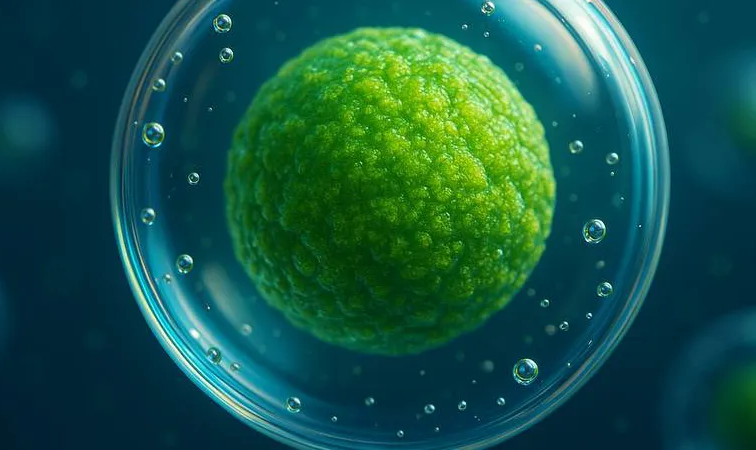
Bioencapsulation is the technique of enclosing a substance (a cell, enzyme, drug, fragrance, nutrient…) inside a microcapsule that protects it and controls how it is released.
This technology has applications in many fields:
- Healthcare: enabling more targeted and effective treatments
- Food industry: improving the preservation of flavors and nutrients
- Agriculture: supporting the gradual release of fertilizers or probiotics
- Cosmetics: extending the action of active ingredients on the skin
Each capsule is the result of extensive research and development: a rigorous and long-term scientific effort that reflects the work carried out by CeREF and HELHa researchers, in service of accessible and sustainable innovation.
An international event focused on applied research
Over three days, participants from Europe (Germany, Italy, France, UK, Belgium, the Netherlands, Poland, Luxembourg, Spain, Slovenia, Turkey, Austria, Portugal, Switzerland, Denmark, Ireland), Asia (India and South Korea) and the Americas (Brazil, Chile, Colombia, Mexico, Canada, United States) exchanged insights on the many applications of encapsulation across health, food, sustainable agriculture, cosmetics and environmental sciences.
“We have researchers working on everything from fragrance capsules to cancer treatments. It’s fascinating to see how encapsulation research can be transferred from one field to another. Every presentation sparks new ideas and potential collaborations,” explained Marijana Dragosavac, chemical engineer at Loughborough University (UK).
CeREF: driving applied research at HELHa
CeREF’s involvement in organizing and coordinating the event highlights its key role in applied research at HELHa.
The center strengthens the link between education, innovation and research, supporting collaborative projects that bring together teachers, researchers, and external partners. This approach fully aligns with HELHa’s mission: to offer professionally anchored education while actively contributing to scientific development and knowledge sharing.
A 35-year history of scientific collaboration
The Bioencapsulation Research Group was founded over 35 years ago by Denis Poncelet, then a professor at McGill University in Canada.
“At the time, several professors were working on encapsulation without knowing each other. I suggested we meet with our students, and that’s how the first gathering began,” he recalls.
Since then, the network has expanded, fostering collaboration and knowledge exchange.
New leadership looking toward the future
The 2025 edition also marked an important transition: Claire Gaiani, professor at the University of Lorraine, was appointed to take over as BRG President from 2026.
“I’m delighted to continue this journey. Above all, the BRG is a human community: experienced researchers, motivated PhD students, and committed industry partners. Our goal is to keep these worlds connected and develop new European projects,” she said.
She also praised the strong involvement of Charlotte Saussez (CeREF, HELHa) and Vesna Jerković, who enthusiastically co-organized the conference in Mons:
“What we see today is the result of teamwork. Everyone is proud of what we have achieved together.”
HELHa is an integral part of the BRG board. In the coming months, Charlotte Saussez will also take on the role of secretary.
From research to practice: science in action
Bioencapsulation is not just theory, its concrete applications were highlighted by several speakers from industry.
Krzysztof Targowski, Commercial Director at Secoya Technologies, a spin-off from Université libre de Bruxelles, explained:
“We have developed a technology based on microfluidics that can generate millimeter-sized capsules. This helps protect sensitive molecules and adapt formulations to specific products. Our processes can be used both in laboratories and at industrial scale.”
Meanwhile, Thorsten Brandau, CEO of Brace, illustrates how bioencapsulation can support more sustainable production methods:
“We are seeing renewed interest in bioencapsulation, especially in agriculture, with applications in plant growth and soil treatment. This field offers real prospects for more responsible production methods.”
Celebrating scientific excellence
On the second day, the Poncelet Innovation Prize was awarded—an honour recognising outstanding work in bioencapsulation.
This year, the prize went to Thorsten Brandau for his notable contributions to the design of high-precision microencapsulation processes.
“I am very honoured to receive this award. It reflects years of research and collaboration within the BRG community. This recognition is not only for my work, but for our collective effort to connect science with real-world applications.”
Beyond the trophy, the distinction highlights the value of scientific work and the passion of those who advance applied research every day.
The passion for discovery, the art of knowledge-sharing
Through keynote lectures, round tables, and informal discussions, BIC 2025 showcased the importance of international scientific dialogue and intellectual curiosity.
For students, the event offered a unique opportunity to learn directly from researchers with diverse approaches and backgrounds.
As Denis Poncelet noted, being a researcher means contributing to something larger than oneself: sharing, learning from others and collectively pushing the boundaries of what is possible.
Thanks to HELHa and CeREF, applied research in French-speaking Belgium continues to grow as a driver of innovation and education, supporting a scientific approach built on openness, collaboration and shared expertise.
Learn more about CeREF: CeREF – Research and Continuing Training Centre of HELHa
Published on 21 November 2025
HELHa Sciences and Life Technologies